

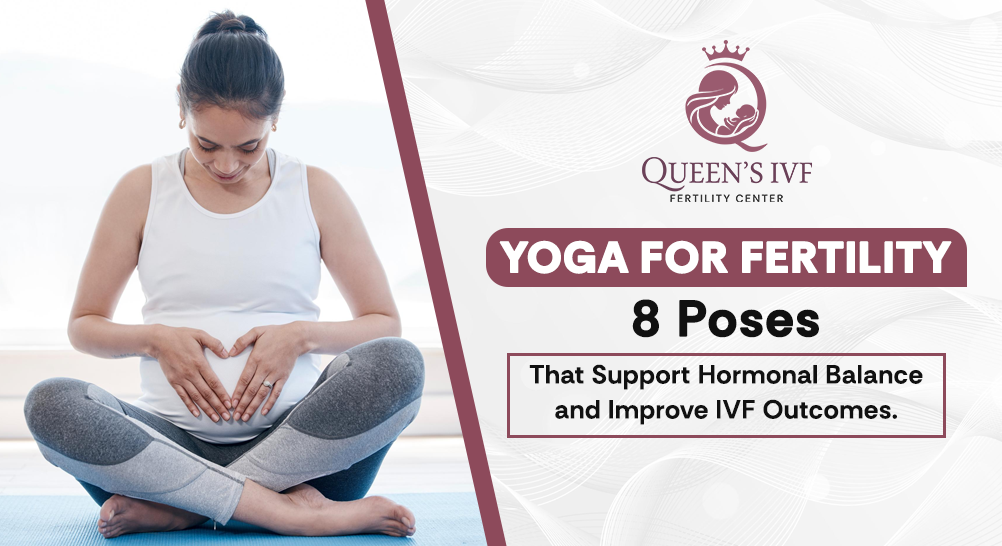
One such practice is yoga. Known for its ability to improve flexibility, reduce stress, and promote physical and mental well-being, yoga has become increasingly popular among individuals trying to conceive. Although yoga is not a treatment for infertility and cannot replace medical care, it may help create a healthier environment for the body by reducing stress and encouraging hormonal balance.
If you are undergoing fertility treatment or planning pregnancy, combining healthy habits with expert medical care can make your journey more comfortable and positive. At Queens IVF Clinic, Dr. Priya Shukla, Senior Consultant and Medical Director, believes in a holistic approach to fertility care by combining advanced reproductive treatments with lifestyle guidance tailored to each patient's needs.
Can Yoga Improve Fertility?
The answer is that yoga should be viewed as a supportive practice rather than a cure. Current research suggests that yoga may help reduce stress, improve sleep quality, increase body awareness, and promote emotional well-being. These benefits can be valuable for individuals undergoing fertility treatment, especially because infertility and IVF often involve emotional and physical challenges.
Stress alone does not directly cause infertility in every case, but chronic stress may affect overall health and hormonal regulation. Yoga encourages mindfulness, controlled breathing, and gentle movement, which may help the body cope better during fertility treatment.
When practised regularly under professional guidance, yoga may support:
Better stress management
Improved flexibility
Healthy blood circulation
Better posture
Improved sleep quality
Emotional well-being
Overall reproductive wellness
It is important to remember that every fertility journey is different. Always consult your fertility specialist before starting any new exercise routine, especially during IVF treatment.
How Hormonal Balance Supports Fertility
Hormones play a vital role in every stage of reproduction. They regulate ovulation, egg development, menstrual cycles, implantation, and pregnancy. Even minor hormonal disturbances may affect fertility.
Several factors can influence hormonal health, including:
PCOS
Thyroid disorders
Obesity
Poor nutrition
Lack of sleep
Chronic stress
Sedentary lifestyle
While yoga cannot directly correct hormonal disorders, reducing stress and supporting overall physical health may contribute to better hormonal regulation. Combined with expert fertility care, these healthy lifestyle practices can support your reproductive wellness.
Why Yoga Is Often Recommended During Fertility Treatment
Many fertility specialists encourage gentle physical activity because it promotes overall health without placing excessive strain on the body.
Yoga offers several potential benefits during fertility treatment:
Reduces Stress
Stress is common during infertility treatment. Deep breathing exercises and mindful movement can help calm the nervous system and improve emotional resilience.
Encourages Relaxation
Relaxation techniques used in yoga may help reduce muscle tension and improve overall mental well-being throughout the fertility journey.
Improves Flexibility
Gentle stretching helps improve flexibility in the hips, pelvis, back, and legs while reducing stiffness caused by prolonged sitting.
Promotes Healthy Blood Circulation
Several yoga poses encourage healthy circulation throughout the body, including the pelvic region, supporting overall reproductive health.
Supports Better Sleep
Regular yoga practice may improve sleep quality, allowing the body to recover and function more efficiently.
8 Yoga Poses That May Support Fertility
1. Butterfly Pose (Baddha Konasana)
Butterfly Pose is one of the most popular yoga postures for women planning pregnancy. It gently stretches the inner thighs, hips, and pelvic floor while improving flexibility around the reproductive organs. Since many people spend long hours sitting at work, this pose helps release stiffness and improve mobility in the lower body.
The slow breathing practised during Butterfly Pose encourages relaxation and helps reduce mental stress. Improved flexibility around the pelvis may also contribute to overall physical comfort during fertility treatment. Although the pose does not directly improve fertility, it supports a healthy and active lifestyle.
At Queens IVF Clinic, patients are encouraged to combine evidence-based fertility treatment with healthy daily habits such as yoga, balanced nutrition, and stress management for overall reproductive wellness.
2. Bridge Pose (Setu Bandhasana)
Bridge Pose strengthens the lower back, glutes, and pelvic muscles while gently opening the chest and hips. It is an excellent posture for improving posture and building strength without placing excessive strain on the body.
The pose also promotes healthy circulation throughout the lower abdomen and pelvis while stretching the spine and hip flexors. Many people find Bridge Pose helpful for relieving back discomfort caused by prolonged sitting or desk work.
Women undergoing IVF should always consult their fertility specialist before practising this pose, particularly after embryo transfer. At Queens IVF Clinic, Dr. Priya Shukla provides personalised guidance on safe physical activity based on each patient's stage of treatment.
3. Child's Pose (Balasana)
Child's Pose is one of the most relaxing yoga postures and is often recommended for stress relief. It gently stretches the hips, thighs, lower back, and shoulders while allowing the body to completely relax.
This posture encourages deep breathing, which activates the body's relaxation response and may help reduce anxiety associated with fertility treatment. Many patients find it useful after a long day or following emotionally demanding medical appointments.
While Child's Pose cannot treat infertility, practising it regularly may improve emotional well-being and help patients feel calmer throughout their fertility journey. At Queens IVF Clinic, emotional support is considered an important part of comprehensive fertility care.
4. Cat-Cow Pose (Marjaryasana-Bitilasana)
Cat-Cow Pose combines two gentle movements that improve spinal flexibility while coordinating movement with breathing. This flowing posture helps relieve stiffness in the neck, shoulders, and lower back while improving posture.
The gentle movement also encourages circulation throughout the abdominal and pelvic regions and helps reduce muscle tension caused by inactivity. Many beginners find this pose easy to learn and suitable for daily practice.
At Queens IVF Clinic, patients are advised to follow moderate physical activity routines that support overall health without interfering with fertility treatment. Gentle yoga can often be part of this balanced approach when approved by the treating specialist.
5. Legs Up the Wall Pose (Viparita Karani)
Legs Up the Wall is a gentle restorative yoga pose that allows the body to relax after a physically or emotionally demanding day. In this posture, you lie comfortably on your back with your legs resting vertically against a wall. It is easy to perform and suitable for most beginners when practised correctly.
This pose may help improve blood circulation, reduce swelling in the legs, ease muscle fatigue, and promote deep relaxation. Many people also find it helpful for reducing stress and improving sleep quality, both of which contribute to overall well-being during the fertility journey.
Although some people believe this pose directly improves fertility, there is no scientific evidence to support that claim. Instead, it should be viewed as a relaxation technique that complements a healthy lifestyle and evidence-based fertility care.
If you are undergoing IVF treatment, particularly after embryo transfer, always consult your fertility specialist before practising this or any yoga pose. At Queens IVF Clinic, Dr. Priya Shukla provides personalised guidance on safe physical activities during every stage of fertility treatment.
6. Cobra Pose (Bhujangasana)
Cobra Pose is a gentle backbend that stretches the front of the body while strengthening the spine and back muscles. It opens the chest, improves posture, and increases flexibility throughout the upper body.
Regular practice may help reduce stiffness caused by prolonged sitting, improve breathing capacity, and strengthen the muscles supporting the spine. A healthy posture and an active lifestyle contribute to overall physical wellness, which is important while preparing for pregnancy.
Women undergoing ovarian stimulation or those who have recently undergone embryo transfer should avoid deep backbends unless specifically advised by their fertility specialist. Since every fertility journey is unique, yoga routines should always be modified according to individual medical advice.
At Queens IVF Clinic, patients receive personalised counselling that includes guidance on maintaining a healthy lifestyle alongside advanced fertility treatments such as IVF, ICSI, IUI, and fertility preservation.
7. Garland Pose (Malasana)
Garland Pose is a deep squat that gently stretches the hips, groin, ankles, and pelvic floor muscles. It is widely practised to improve lower body flexibility and strengthen the muscles that support the pelvis.
This pose encourages better balance, mobility, and body awareness while helping release tightness caused by long hours of sitting. Practising Garland Pose with proper alignment and controlled breathing can also promote relaxation and improve flexibility over time.
While this posture is often included in fertility yoga routines, it should not be considered a medical treatment for infertility. Instead, it supports overall physical fitness and complements a healthy lifestyle.
The specialists at Queens IVF Clinic believe that combining advanced fertility treatments with healthy habits such as yoga, balanced nutrition, and regular physical activity can help patients feel more confident and prepared throughout their parenthood journey.
8. Bound Angle Forward Fold
The Bound Angle Forward Fold is a calming yoga posture that combines gentle stretching with mindful breathing. This pose focuses on opening the hips and relaxing the pelvic area while encouraging the body to release tension.
It may help improve flexibility, reduce muscle tightness, and promote a sense of calm after a busy day. Slow breathing during this pose can also help reduce stress levels, making it a useful addition to a daily wellness routine.
Comfort should always be prioritised over stretching deeply. If you experience discomfort or are undergoing fertility treatment, it is important to modify the posture or avoid it based on your doctor's advice.
At Queens IVF Clinic, every patient receives personalised treatment recommendations, including guidance on healthy lifestyle practices that safely complement fertility care.
Is Yoga Safe During IVF Treatment?
Many couples ask whether they can continue practising yoga while undergoing IVF treatment.
In most cases, gentle yoga may be appropriate during certain phases of IVF, particularly before ovarian stimulation begins. However, during active treatment, your fertility specialist may advise avoiding high-impact exercise, deep twists, abdominal pressure, inversions, or physically demanding yoga styles.
After embryo transfer, rest and following your doctor's recommendations are generally more important than maintaining an exercise routine.
Before continuing yoga, always discuss the following with your fertility specialist:
Which yoga poses are safe for your treatment stage
Exercises that should be avoided
When to pause or restart physical activity
Whether modifications are required based on your medical condition
At Queens IVF Clinic, patients receive personalised guidance to help them safely balance physical activity with fertility treatment.
Lifestyle Tips That Complement Fertility Yoga
Yoga is most effective when combined with other healthy lifestyle habits. Supporting your overall health can positively influence your fertility journey and prepare your body for treatment.
Some healthy habits include:
Eat a balanced diet rich in fruits, vegetables, whole grains, healthy fats, and lean protein.
Stay well hydrated throughout the day.
Maintain a healthy body weight.
Sleep for seven to eight hours every night.
Avoid smoking, tobacco, and excessive alcohol consumption.
Limit caffeine intake if recommended by your doctor.
Practise mindfulness, meditation, or breathing exercises to reduce stress.
Take fertility medications and supplements exactly as prescribed by your specialist.
Attend regular follow-up appointments and fertility evaluations.
These habits cannot replace medical treatment, but they can support overall physical and emotional well-being.
Why Choose Queens IVF Clinic?
Choosing the right fertility clinic is one of the most important decisions for couples planning pregnancy. At Queens IVF Clinic, patients receive compassionate care supported by advanced reproductive technology and evidence-based medical expertise.
The clinic offers comprehensive fertility services under one roof, including:
IVF (In Vitro Fertilisation)
ICSI (Intracytoplasmic Sperm Injection)
IUI (Intrauterine Insemination)
Fertility assessment and counselling
Hysteroscopy and laparoscopy
Fertility preservation
Recurrent miscarriage management
High-risk fertility care
Every treatment plan is carefully personalised after understanding the couple's medical history, fertility goals, age, and diagnostic findings. The clinic focuses on transparent communication, ethical treatment practices, and continuous patient support throughout every stage of the fertility journey.
In addition to advanced medical care, Queens IVF Clinic believes in educating patients about healthy lifestyle choices, nutrition, stress management, and wellness practices that can complement fertility treatment.
Meet Dr. Priya Shukla
Dr. Priya Shukla is the Senior Consultant and Medical Director at Queens IVF Clinic. With extensive experience in reproductive medicine and infertility management, she has helped numerous couples navigate complex fertility challenges through personalised treatment plans.
Her expertise includes IVF, ICSI, IUI, recurrent pregnancy loss, fertility preservation, minimally invasive gynaecological procedures, and comprehensive infertility evaluation.
Dr. Priya Shukla believes that successful fertility care goes beyond medical treatment. She works closely with every patient to understand their unique concerns, explain treatment options in detail, and recommend lifestyle modifications that support overall reproductive health. Her compassionate approach, combined with advanced fertility techniques, ensures that every couple receives personalised care throughout their parenthood journey.
Frequently Asked Questions
Q1. Can yoga increase my chances of pregnancy?
Yoga cannot guarantee pregnancy or cure infertility. However, it may help reduce stress, improve flexibility, and support overall well-being, making it a valuable complementary practice alongside fertility treatment.
Q2. Should I practise yoga every day while trying to conceive?
Gentle yoga can usually be practised regularly if your doctor approves. The intensity and duration should be appropriate for your health and fitness level.
Q3. Is yoga safe during IVF treatment?
Gentle yoga may be suitable during certain stages of IVF. However, strenuous poses and high-impact exercises are generally avoided during ovarian stimulation and after embryo transfer. Always follow your fertility specialist's advice.
Q4. Which yoga pose is best for fertility?
There is no single yoga pose proven to improve fertility. A balanced routine that includes gentle stretching, breathing exercises, and relaxation techniques may support overall wellness.
Q5. Can stress affect fertility treatment?
Stress does not always cause infertility, but managing emotional well-being may help patients cope better with fertility treatment. Yoga, meditation, counselling, and healthy lifestyle habits can all contribute to improved mental wellness.
Q6. Can men also practise fertility yoga?
Yes. Yoga may help men improve flexibility, reduce stress, maintain overall fitness, and support a healthy lifestyle during fertility treatment.
Q7. Can I start yoga after an embryo transfer?
Exercise recommendations vary depending on your medical condition and treatment stage. Always consult your fertility specialist before resuming yoga after embryo transfer.
Q8. How long should I practise yoga for fertility?
Many people benefit from practising gentle yoga for 20 to 40 minutes several times a week. Consistency is generally more beneficial than intensity.
Final Thoughts
Yoga is not a replacement for fertility treatment, but it can be a meaningful part of a healthy lifestyle. Gentle yoga, mindful breathing, and stress management may support your physical and emotional well-being while you prepare for pregnancy or undergo IVF treatment.
The most effective fertility care combines advanced medical expertise with personalised lifestyle guidance. If you are planning to start a family or experiencing difficulty conceiving, consulting an experienced fertility specialist is the first step toward understanding your options.
At Queens IVF Clinic, Dr. Priya Shukla and her dedicated team provide comprehensive fertility evaluation, advanced reproductive treatments, and compassionate support tailored to every patient's unique journey. Whether you are exploring IVF, IUI, fertility preservation, or simply seeking expert advice, Queens IVF Clinic is committed to helping you move forward with confidence and hope on your path to parenthood.