

AMH is only one part of a fertility assessment. Your age, menstrual history, egg quality, ovulation, and other fertility factors are also important when understanding your chances of pregnancy.
What Is AMH?
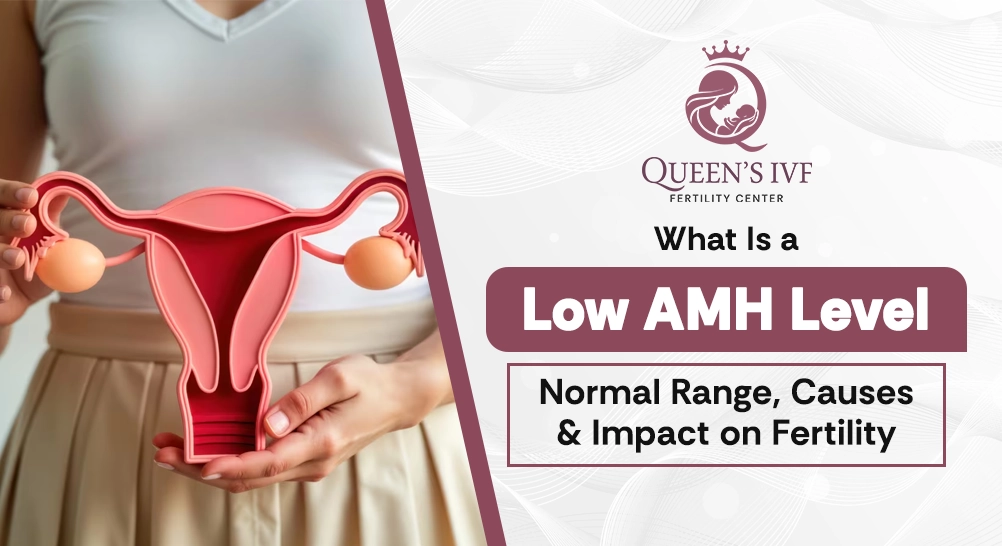
AMH is produced by small follicles in the ovaries. An AMH blood test is commonly used to estimate ovarian reserve.
Unlike some other reproductive hormones, AMH levels usually remain relatively stable during the menstrual cycle. This makes the test useful when assessing ovarian reserve.
However, AMH mainly gives information about egg quantity, not egg quality. A low result should therefore be interpreted along with other fertility tests.
What Is a Normal AMH Level by Age?
There is no single AMH value that is considered normal for every woman. AMH levels naturally tend to decrease with age.
The normal AMH level by age can vary between women and may also differ depending on the laboratory and testing method.
For this reason, your AMH result should not be interpreted based on one number alone. A fertility specialist can assess your result along with your age, ultrasound findings, and other fertility factors.
What Causes Low AMH Levels?
There can be several reasons for low AMH levels. The most common factor is increasing age, as ovarian reserve naturally declines over time.
Other low AMH level causes may include:
Natural age-related decline in ovarian reserve
Certain ovarian conditions
Previous ovarian surgery
Some medical treatments that can affect the ovaries
Genetic factors
Certain autoimmune conditions
In some women, the cause may not be clear
Having a low AMH does not necessarily mean that something is wrong with your health. It mainly indicates that the number of remaining eggs may be lower than expected.
What Are the Symptoms of Low AMH?
In most cases, there are no specific low AMH levels symptoms.
Many women with low AMH have regular periods and may not notice any symptoms. A low AMH level is often discovered during a fertility evaluation or blood testing.
Some women may experience fertility difficulties because of their overall reproductive health, but these cannot be attributed to low AMH alone.
Can Low AMH Affect Fertility?
A low AMH level can indicate a reduced ovarian reserve, which may affect the number of eggs available during fertility treatment.
However, AMH does not directly predict whether a woman can become pregnant naturally. Women with low AMH can still become pregnant, depending on factors such as age, ovulation, egg quality, sperm health, and the condition of the reproductive organs.
Low AMH can also affect how the ovaries respond to fertility medicines during treatments such as IVF. Women with lower ovarian reserve may produce fewer eggs during ovarian stimulation.
What Are the Treatment Options for Low AMH?
There is no treatment that can reliably increase the number of eggs in the ovaries. Therefore, low AMH levels treatment mainly focuses on understanding the cause and choosing the most suitable fertility plan.
Depending on your age, fertility goals, ovarian reserve, and other test results, your doctor may recommend:
Trying to conceive naturally when appropriate
Fertility monitoring
Fertility medicines
IVF or other assisted reproductive treatments
Discussing fertility preservation when appropriate
The right approach is different for every woman. Starting fertility evaluation earlier can be particularly important when ovarian reserve is reduced.
Can You Get Pregnant With Low AMH?
Yes, pregnancy is still possible with a low AMH level.
AMH should not be used alone to determine whether you can become pregnant. Egg quality, which is strongly related to age, is also an important factor.
If you have received a low AMH result and are planning a pregnancy, it is best to discuss the result with a fertility specialist rather than assuming that pregnancy will not be possible.
When Should You See a Fertility Specialist?
If you have been told that your AMH is low, a fertility specialist can help you understand what the result means for your individual situation.
If you are looking for the best fertility centre in Delhi, consider choosing a centre where your AMH result can be reviewed along with your age, ultrasound, menstrual history, and other fertility tests.
Patients looking for a Best fertility specialist in Safdarjung Enclave can consult Dr Priya Shukla for personalised fertility evaluation and guidance based on their reproductive goals.
Frequently Asked Questions About Low AMH
1. What is considered a low AMH level?
The range can vary depending on the laboratory and testing method. Your doctor will interpret the result based on your age and other fertility findings rather than using one fixed number.
2. Can low AMH mean infertility?
Not necessarily. Low AMH generally indicates reduced ovarian reserve, but it does not mean that pregnancy is impossible.
3. What are the main reasons for low AMH levels?
Age is one of the main factors. Other possible causes include certain ovarian conditions, previous ovarian surgery, some medical treatments, genetic factors, and certain autoimmune conditions.
4. Does low AMH cause irregular periods?
Not always. Many women with low AMH continue to have regular periods. AMH is mainly a marker of ovarian reserve and does not directly determine whether your periods will be regular.
5. Can AMH levels increase naturally?
AMH levels can vary somewhat between tests, but there is no proven treatment that can reliably increase the number of eggs in the ovaries.
6. Should I consider IVF with low AMH?
IVF may be considered depending on your age, ovarian reserve, fertility history, and other factors. A fertility specialist can help determine whether IVF is suitable for you.
Conclusion
A low AMH level can indicate a lower ovarian reserve, but it does not mean that pregnancy is impossible. AMH is only one part of a complete fertility assessment.
If you have received a low AMH result, discuss it with a fertility specialist who can evaluate your age, ovarian reserve, reproductive health, and fertility goals and help you understand the options available.